
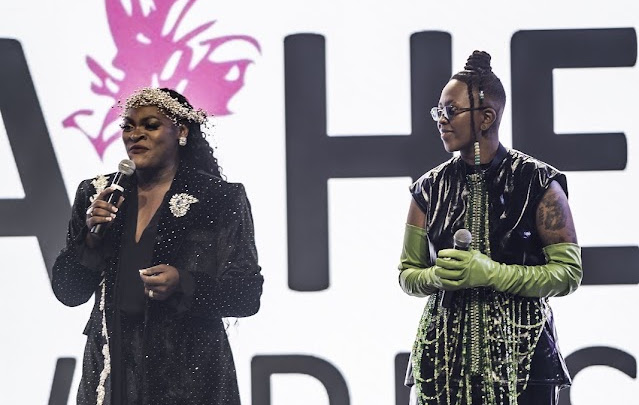
The Feather Awards turned 18, and like any South African coming-of-age, it was equal parts celebration, reflection and a very stylish exit. Held at an intimate ceremony in Joburg under the theme The Signature Edition, the awards once again proved they are less a red-carpet jolly and more a living archive of queer South African excellence.
For nearly two decades, the Feathers have done what few local institutions manage: they have stayed relevant without losing their edge. This year’s special recognitions honoured the quiet revolutionaries, the community builders and safe-space makers whose work rarely makes headlines but keeps people alive and thriving.
The honourees who matter
Among them were Namibian activist Hillary Shimi, who received the Global Feather of the Year for cross-border lesbian advocacy, and Banyana Banyana coach Desiree Ellis, named Sport Personality of the Year. Media veteran Felicia Mabuza-Suttle took Role Model of the Year, Black Burns Fast was named Media Platform of the Year, and Salome Lebeko received the Rainbow Parenting Award – a category that quietly says everything about how far this country has come, and how far it still has to go.
The night’s most significant shift, though, was structural. The Designer of the Year Award was formally renamed the Maria McCloy Award in honour of the late media powerhouse, who was named its inaugural recipient. The new Thami Dish Award went to Lelo Whats Good for amplifying queer voices and authentic storytelling. Renaming awards after living legacies is how a community writes its own history – and the Feathers just did exactly that.
Baby Joe and the pink carpet
Then came the moment that stopped the room. The Simon Nkoli Award went to entertainment legend Baby Joe Correira, celebrated for breaking barriers and inspiring generations. Hosts Zizo Beda, Khaya Dladla and Lula Odiba kept the evening moving, while Tyrone Gordon Willard led the pink carpet, a fashion spotlight staged with Proudly SA, whose “Are you wearing local” activation turned the glamour into an economic argument.
“Fashion is more than a personal statement; it’s an economic choice,” said Proudly SA CEO Eustace Mashimbye. He is right. Every locally designed garment on that carpet supported South African designers, manufacturers and jobs.
The headline winners, Kagiso Mogola (Best Styled Individual), Teddy Geldart (Hunk of the Year), Desiree Komi (Hot Chick of the Year), Manana (Musician of the Year), Credo V (Drama Queen of the Year), Coachella Randy (Social Media Personality of the Year) and Miss Gaga (Diva Extraordinaire of the Year), are the culture. But the real story is the Thami Dish Fellowship: a 12-month leadership programme equipping nine emerging LGBTQIA+ leaders, one from each province, with the skills, resources and networks to drive meaningful change. That is not a party favour. That is infrastructure.
And it came with a farewell. Thami Willis formally resigned from the Feather Awards to focus on the Foundation and a new personal chapter following his recent marriage.
“History will not wait for us to feel ready,” he said. “The Feather Awards is the catalyst. The Fellowship is the work. And tonight we celebrated the signatures of those who have made our communities safer, louder and more joyful.”
Eighteen years of feathers, fabulousness and fearless advocacy, signed off with a promise that the next chapter belongs to the provinces, not just the pink carpet. Now that is a signature worth sharing.




Leave a Reply
You must be logged in to post a comment.