Imagine driving through Pretoria, the capital of a free, democratic South Africa, and stumbling across a town where only white Afrikaners are allowed to live. Not by coincidence. Not by income bracket. But by design.
That’s not a dystopian film plot. That’s Kleinfontein.
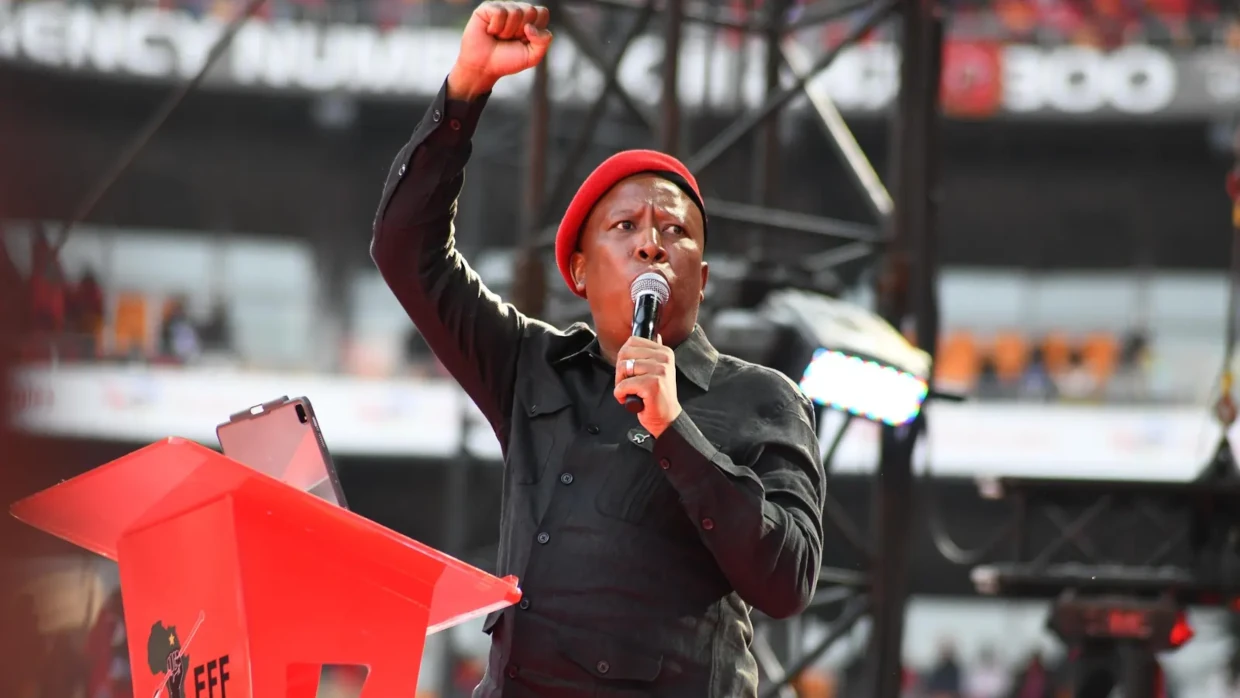
A self-declared cultural community wrapped in barbed wire history, Kleinfontein stands as a living fossil of apartheid’s ugly ideology. It preaches “heritage,” but practises exclusion. And last week, the EFF stood outside its gates, fists raised, calling it what it truly is: a racist enclave in denial about the death of apartheid.
We Can’t Keep Pretending This Is Normal
South Africans have long been fed the myth that places like Kleinfontein or Orania are “cultural havens.” They say these are safe spaces for Afrikaner identity. But safe from what? From democracy? From diversity? From the truth?
Let’s cut the nonsense: if you build a town and decide who can live there based on race, you’re not preserving culture—you’re preserving segregation.
And if Kleinfontein is a culture, then so was apartheid.
Here’s the twist: we’ve been told, rightly so, that the struggle chants like “Kill the Boer” no longer make sense in post-apartheid South Africa. We’ve matured, they say. We’ve moved on. That rhetoric belongs to a dark past.
But how, then, does a white-only town still make sense? How do we outlaw old war cries while nurturing the systems they fought against?
You can’t throw out the fire and keep the smoke.
We didn’t choose selective amnesia in 1994. We chose a full break from the past. Either we left both apartheid-era chants and apartheid-era towns behind—or we left nothing behind at all.
Behind the Gate, Nothing Has Changed
Ask the black workers at the petrol station just outside Kleinfontein’s border. Ask the man who was denied a tip unless he spoke Afrikaans. Ask those who were told, in the year 2025, that they don’t belong where they labour.
It’s not symbolic. It’s systemic.
And when the City of Tshwane accepted the EFF’s memorandum demanding immediate action against the illegal settlement, there was a glimmer of hope. But hope without follow-through is just theatre. And we’ve seen that play too many times.
The Illusion of Justice
Yes, the High Court declared Kleinfontein illegal in August last year. Yes, there was a ruling. But what’s a ruling with no teeth?
What’s the point of a Constitution that calls for non-racialism if racially exclusive towns still flourish?
What’s the point of freedom if the geography of that freedom still looks like 1982?
Meanwhile, black South Africans are criminalised for occupying hijacked buildings, denied access to land, and told they’re breaking zoning laws. But when white Afrikaners turn farmland into a walled-off community, it becomes “a lifestyle choice.”
No. It becomes a choice to deny others’ lives.
What Kind of Rainbow Nation Is This?
We love to shout about how far we’ve come. But places like Kleinfontein remind us how far we haven’t. The problem isn’t just the town—it’s what the town represents. The idea that white South Africans can still carve out pieces of this land and say, “This is ours. You stay out.”
But land, like justice, isn’t something you gate off.
And if we let places like Kleinfontein survive, don’t be shocked when more spring up. Don’t be surprised when we wake up one day and find we’ve redrawn the map of South Africa, back into white and black.
So, What Now?
We can’t march for a day and move on. We can’t wait for politicians to decide if justice is convenient this election cycle. This is our fight—because this is our country.
Towns like Kleinfontein must be dismantled, not debated.
Their laws, their zoning, their statues of Verwoerd must be torn down—brick by brick, like the Berlin Wall of our time.
We must teach our children that apartheid was not a chapter—it was the enemy. And that enemy is not just in textbooks, it’s still building towns under the radar.
🔥 So let’s talk:
If “Kill the Boer” no longer belongs in South Africa, then neither does Kleinfontein. Are we ready to confront both—or are we still negotiating with our past?
Let the debate begin. Loud. Raw. Unapologetically South African.