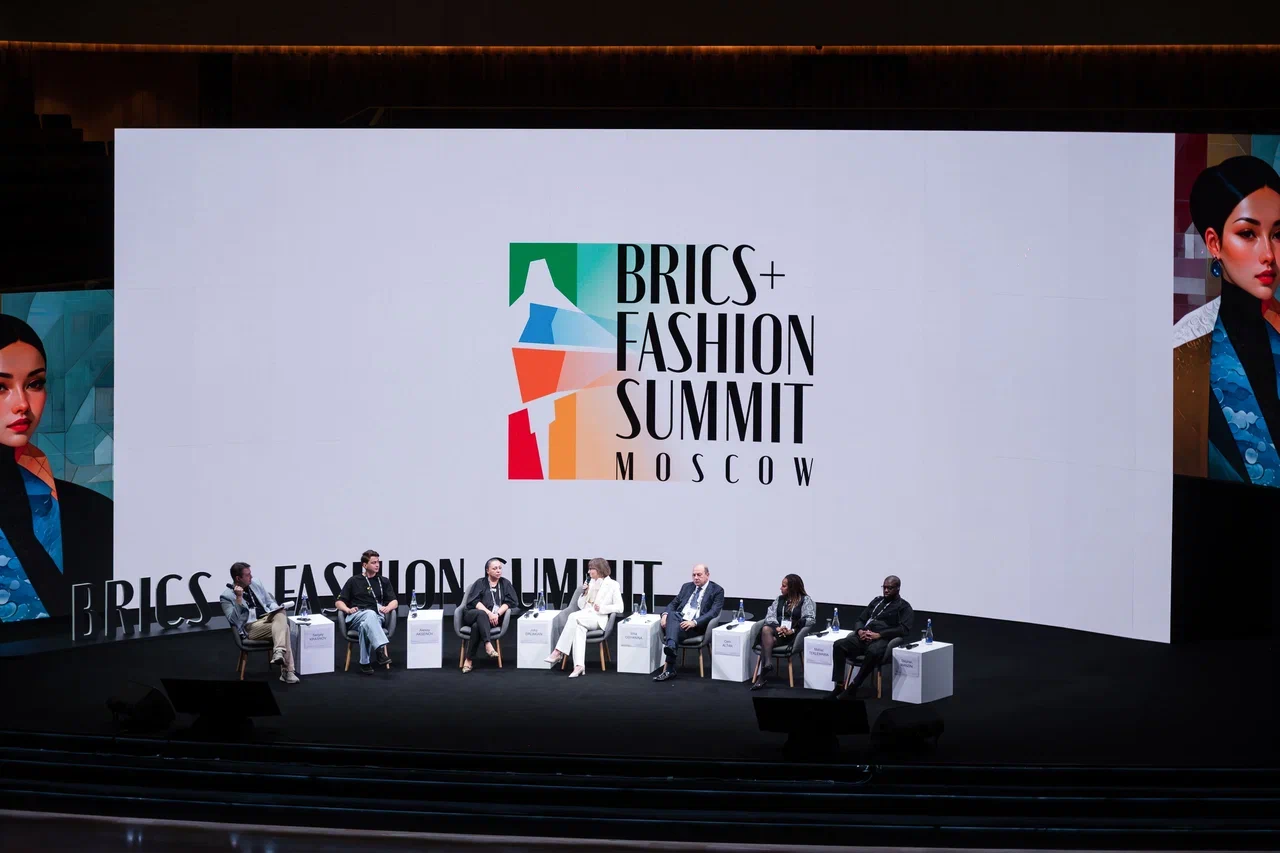
South African fashion is packing its bags for Moscow. Later this month, Stephen Manzini, CEO of Soweto Fashion Week and the South African Fashion Association, will join Colleen Eitzen, co-founder of retail giant The Space, at the fourth BRICS+ Fashion Summit in the Russian capital. The event runs from 28 to 30 September 2026 and has become one of the largest gatherings for the fashion business of fast-growing economies; last year alone, it drew over 15,000 attendees from more than 60 countries.
For Manzini, the Summit is more than a networking jolly. “The BRICS+ Fashion Summit is a critical communication platform for emerging countries, especially for Africa,” he says. “It provides a rare space where our voices, stories, and design philosophies are seen and respected on equal footing. For African creatives, it’s a gateway to connect with like-minded partners from the Global South, share our cultural richness, and position fashion as both a creative and economic force.”
He’s not the only African heavyweight making the trip. The delegation includes Susan Sabet of the Egyptian Fashion & Design Council, Mahlet Teklemariam of Hub of Africa Fashion Week, Hind Joudar of Maroc Fashion Week, and Nana Addo Tamakloe of Accra Fashion Week, among others. Kenya Fashion Council’s Brian James Kihindas used last year’s Summit to convene fashion week organisers from East, West, Southern and North Africa around the same table for the first time — a meeting that has since evolved into an active network for African fashion week conveners.
The global fashion economy is shifting. The traditional gatekeepers — Paris, Milan, New York — are no longer the only paths to market. The BRICS+ Fashion Summit positions itself as a counterweight, a place where designers from emerging economies can build trade routes that bypass the old centres of power. For South African designers, that means potential access to markets in Russia, the CIS, Asia, the Middle East, and Latin America. Botswana’s House of Ditso is already in talks about entering the Russian and CIS markets. MTC Windhoek Fashion Week is discussing a designer exchange programme with Moscow Fashion Week. These are not abstract possibilities — they are deals in motion.
There’s something deeply ubuntu about this. The Summit’s most valuable outcome isn’t a single brand landing a single buyer. It’s the collective. Kihindas describes how African fashion weeks have historically developed in isolation, each focused on promoting local talent within their own borders. Cross-border trade, designer mobility, and collective negotiating power have remained fragmented. What emerged from Moscow is a unified umbrella body for African fashion week conveners — a digital hub where organisers exchange insights on production standards, buyer acquisition, sponsor engagement, and event logistics suited for African markets. That’s the kind of infrastructure that turns individual talent into an industry.
South African fashion is not just a creative pursuit — it’s an economic one. The industry employs designers, seamstresses, photographers, models, publicists, and retailers. When Soweto Fashion Week gets a seat at the BRICS+ table, it’s not just Manzini in the room. It’s the young designer from Diepkloof who gets a shot at showing in Moscow. It’s the small manufacturer in Gauteng who suddenly has access to a buyer from Dubai. It’s the cultural capital of our streets — our amapiano aesthetics, our streetwear, our heritage textiles — being recognised as a valuable export.
The Summit runs alongside a new season of Moscow Fashion Week from 26 September to 1 October, featuring more than 70 runway shows from over ten countries. South Africa won’t have a runway show there this time. But Manzini and Eitzen are laying the groundwork for something bigger than a single season. They’re building the relationships that could put South African fashion on the map in markets that most local designers have never had access to.
So the next time you see a Soweto Fashion Week show, remember: the story doesn’t end at the runway. It ends in Moscow, in a boardroom, in a handshake between two fashion week organisers who decided that Africa’s fashion industry is stronger together. That’s the real show.